Why AI Conversations Are Changing in 2026
For the past few years, our relationship with artificial intelligence has been largely conversational. We've marveled at ChatGPT's ability to write poetry, DALL·E's talent for creating images, and Gemini's knack for holding intelligent discussions. But as we settle into 2026, the novelty has worn off, and the conversation has fundamentally shifted.
The Demand for ROI
According to McKinsey, nearly 80 percent of companies now use generative AI, yet just as many report no meaningful impact on revenue or profitability. Boards are no longer impressed by demos—they want returns.
80% adoption, but limited ROIThe 'Remote Turing Test' is Broken
AI is now virtually indistinguishable from humans in standard digital communications. This success has forced the conversation to move from 'Can it do it?' to 'Should it do it?'—shifting focus toward governance, digital trust, and authentication.
Multi-Model Orchestration
The question is no longer 'Which single model is best?' but rather 'How do we orchestrate multiple specialized models?' Companies now use one model for reasoning, another for coding, and another for summarization to optimize cost, speed, and accuracy.
Market Reality
While 88% of organizations now use AI in some capacity, the competitive advantage has shifted entirely toward those who can integrate it securely into their core operational architecture. The hype cycle is over; the construction phase has begun.
88% adoption, but integration is keyof enterprises will manage multi-agent systems by 2027 (IDC)
of in-house AI agent projects will fail by 2028 due to poor ROI
of software vendors will shift to outcome-based pricing by 2028
have already deployed AI agents in multi-stage workflows
plan to tackle more complex use cases in 2026
India AI Impact Summit 2026: Key Highlights
The India AI Impact Summit 2026, held just last week in New Delhi, marked a pivotal moment in the global AI conversation. Prime Minister Narendra Modi set the tone by framing India's benchmark for AI through the lens of 'Sarvajan Hitaya, Sarvajan Sukhaya'—Welfare for all, Happiness of all. This wasn't just a summit about algorithms; it was a global gathering discussing how to translate AI from pilot projects into tangible development outcomes.
attendees participated in the summit
global AI leaders attended
countries sent delegations
students participated in AI-related engagements
infrastructure investment pledges were announced
in deep-tech venture commitments
From Content Generation to Autonomous Systems
The most profound technological pivot of 2026 is the transition from Generative AI (content creation) to Agentic AI (autonomous systems). In the generative phase, humans were the operators. You prompted an AI to draft an email or summarize a meeting, and then you executed the next steps. In the autonomous phase, AI systems carry intent forward. An AI agent doesn't just draft an email; it analyzes a CRM, formulates a strategy, sends the communication, and updates the sales pipeline with minimal human oversight.
"Generative AI is the brilliant analyst. You give it a complex problem and it produces a comprehensive report. The report is the deliverable."
"Agentic AI is the autonomous project manager. It takes a high-level goal, devises a strategy, and executes that plan across multiple tools. The completed project is the deliverable."
Why This Comparison Matters Now
Understanding the distinction between generative tools and autonomous agents isn't just an academic exercise—it's a strategic imperative for 2026. The operational playbook that worked in 2023 is already obsolete.
Workforce Redesign
AI is no longer just making individual employees faster at writing; it's automating entire 'digital assembly lines.' IDC predicts that by late 2026 or early 2027, 40% of roles in large enterprises will involve deep collaboration with AI agents, fundamentally redefining job levels from entry-level to senior positions.
40% of roles will involve deep AI collaboration by end of 2026Security and Architecture
When AI agents can independently access databases, make purchases, or alter code, enterprise security must shift from basic policy enforcement to zero-trust agent observability. Security experts warn that AI agents themselves will become prime attack targets, creating a 'new type of insider threat.'
Infrastructure Demands
Agentic AI breaks the old cloud-computing model. Because agents need to make decisions in milliseconds and handle sensitive data, computing is moving to the edge—closer to where the data lives. Fusion Worldwide reports that agentic systems require low-latency execution, persistent context, and continuous operation.
The Competitivity Gap
Companies that continue to treat AI merely as a brainstorming assistant will be vastly outpaced by competitors deploying end-to-end autonomous systems. 80% of organizations now report measurable economic impact from their AI agent investments—not projected value, but actual ROI.
80% report measurable ROI from AI agentsWhat Is Generative AI?
Generative AI is a class of artificial intelligence models trained to create new content—text, images, audio, video, or code—based on patterns learned from vast amounts of existing data. Think of it as a brilliant mimic: It has studied millions of books, articles, images, and conversations, and it can generate convincing new examples that look like they were created by humans.
How It Works
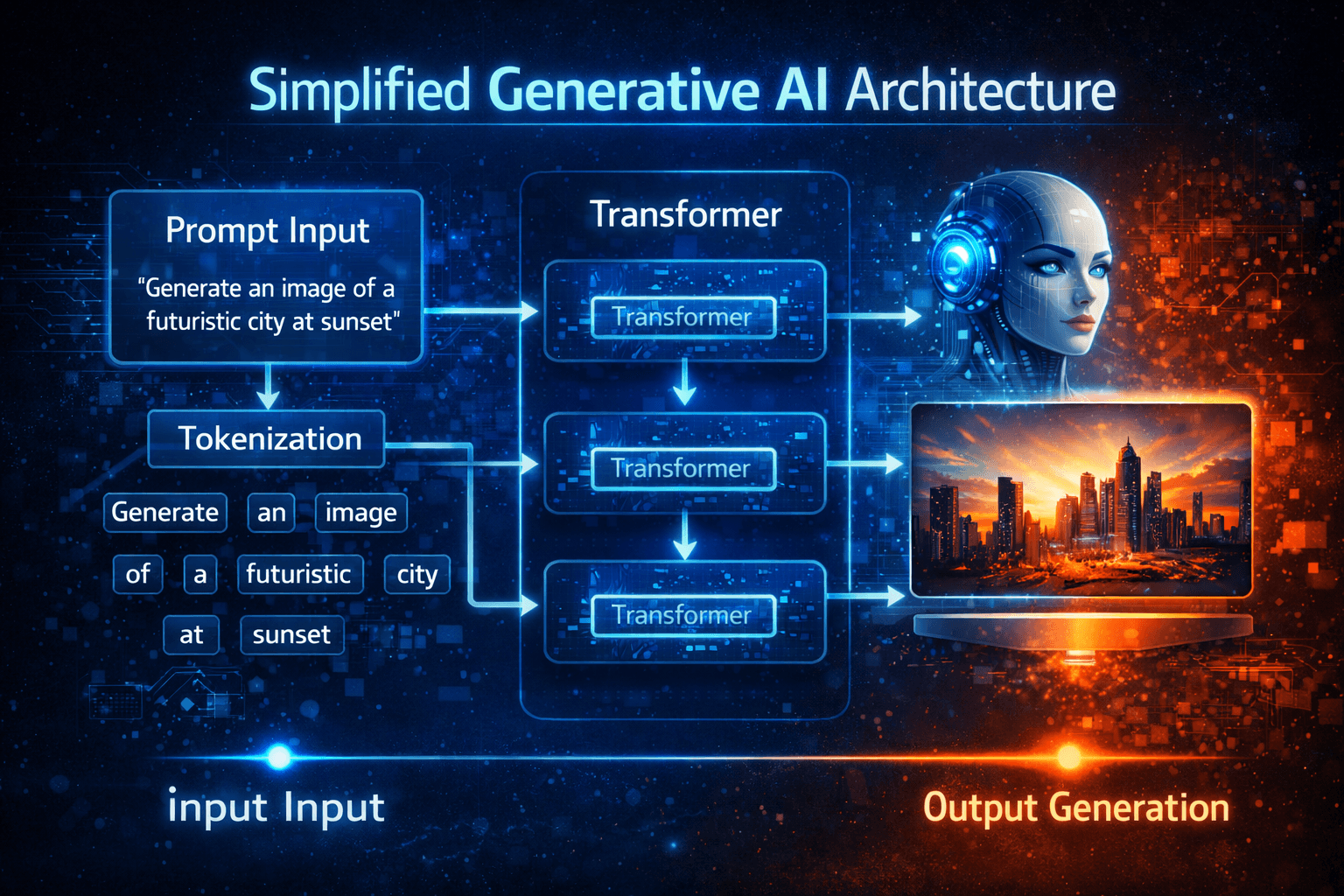
Generative AI encompasses several different technological approaches, but they all share the same basic goal: learning the underlying patterns of training data to generate new, similar data.
Transformer Architectures and Large Language Models (LLMs)
Transformers revolutionized AI by allowing models to process data in parallel, leading to massive improvements in natural language processing. Today's systems like GPT-4, Claude, and Gemini all build on this foundation.
- •Self-Attention Mechanisms: These let models weigh the importance of different words in a sentence, helping them understand context and relationships. For example, in the sentence 'The bank was overflowing with fish,' self-attention helps the model figure out we're talking about a riverbank, not a financial institution.
- •Multi-Head Attention: This mechanism allows the model to focus on different parts of the input simultaneously, capturing diverse information—syntax, semantics, sentiment—all at once.
- •Chain-of-Thought Reasoning: Enhances problem-solving by enabling step-by-step logical reasoning, which is particularly useful for complex tasks like math problems or multi-step planning.
Diffusion Models & Latent Space Techniques
For image and audio generation, diffusion probabilistic models have emerged as the dominant approach. These models work by gradually adding noise to training data, then learning to reverse that process—starting from pure noise and gradually 'denoising' it into a coherent image.
- •Computational Efficiency: Latent diffusion models operate in a compressed 'latent space' rather than pixel space, making them much faster and less resource-intensive.
- •Improved Control: Techniques like classifier-free guidance and conditional diffusion allow precise control over generated outputs—you can specify style, content, and composition with remarkable accuracy.
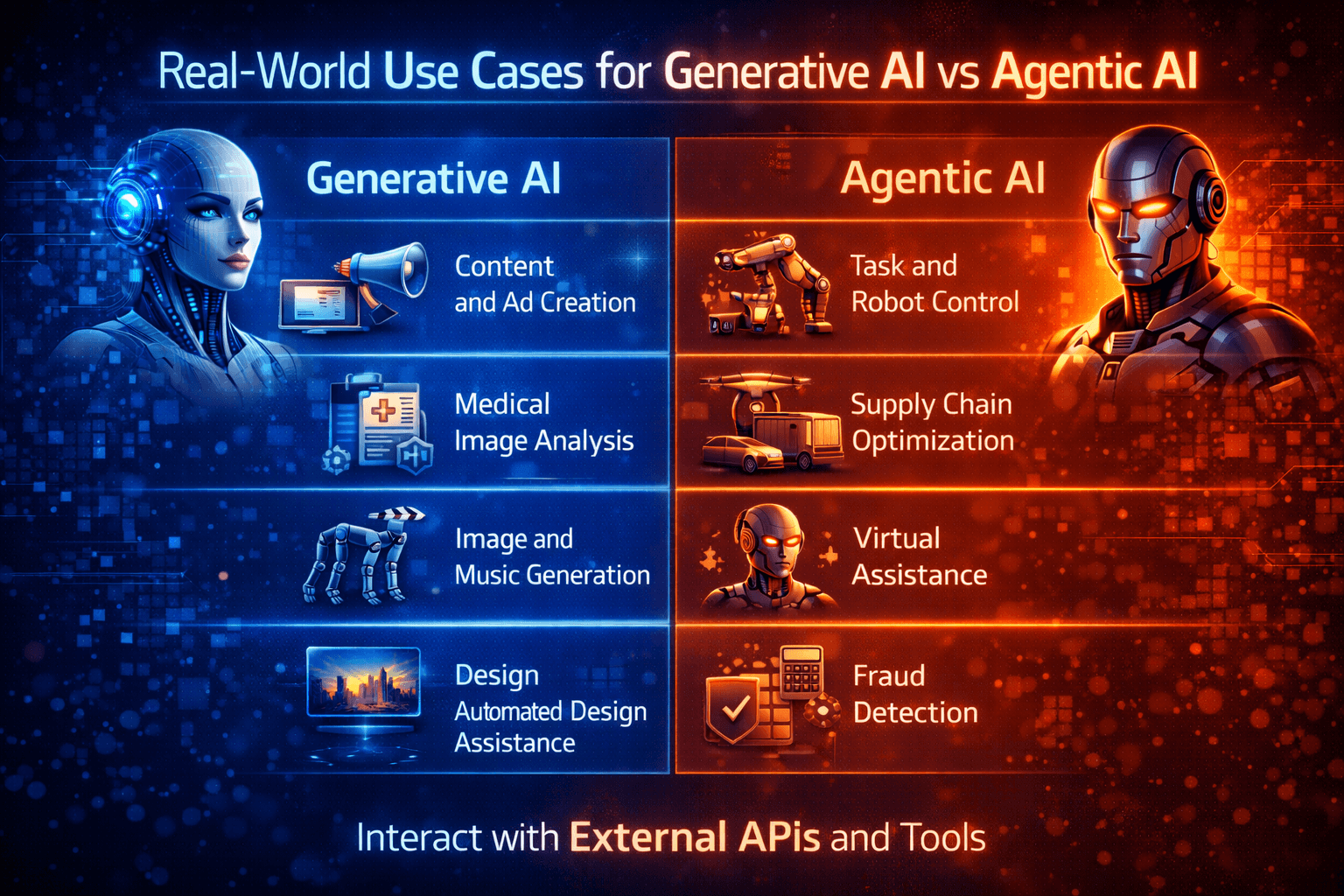
Content Creation
Marketing teams use tools like Jasper and Copy.ai to generate blog posts, social media content, and ad copy. News organizations use AI to draft earnings reports and sports recaps.
Chatbots and Customer Support
Companies deploy AI-powered chatbots that handle routine customer inquiries, freeing human agents for complex issues. These bots can understand natural language, access knowledge bases, and provide helpful responses 24/7.
Image Generation
Designers and artists use Midjourney, DALL·E 3, and Stable Diffusion to create concept art, marketing visuals, and product mockups in seconds rather than days.
Code Generation
GitHub Copilot and similar tools help developers write code faster by suggesting completions, generating entire functions, and even writing tests. Studies show 50%+ time savings on routine coding tasks.
Education
AI tutors provide personalized explanations and practice problems, adapting to each student's learning pace and style.
Strengths
- •Creativity at Scale: Generative AI can produce endless variations of content instantly, making it invaluable for brainstorming and iteration.
- •Speed: Tasks that would take humans hours or days can be completed in seconds.
- •Accessibility: Tools like ChatGPT have democratized access to advanced AI capabilities, putting powerful creative assistance in anyone's hands.
- •Continuous Improvement: Models are constantly being refined, with each generation showing improved reasoning, reduced bias, and better accuracy.
Limitations
- •Hallucinations: Generative AI can confidently produce false or nonsensical information. It doesn't 'know' things in the human sense; it predicts plausible-sounding text based on patterns.
- •No True Understanding: These models manipulate symbols based on statistical patterns but lack genuine comprehension. They can't reason about the world in the way humans do.
- •Reactive, Not Proactive: Generative AI waits for a prompt. It can't initiate action or pursue goals independently.
- •Output-Only: The response is the final product. Generative AI can't actually do anything with its creations—it can't send an email, update a database, or book a flight.
What Is Agentic AI?
Agentic AI refers to autonomous systems that can plan, reason, and act on their own to achieve specific goals. Unlike traditional AI that reacts to prompts or processes static datasets, agentic AI mimics human-like decision-making. These systems take initiative, operate across multiple steps, and interact with tools or environments dynamically.
How It Differs
The fundamental difference lies in autonomy and action. Traditional AI systems—including generative AI—are reactive. You give them a command, they produce a response, and the interaction ends. Agentic AI, by contrast, is proactive.
"Imagine a customer service agent who answers questions but takes no further action. That's generative AI in a support role."
"Now imagine an agent who understands the user's intent, pulls information from multiple databases, and resolves the ticket end-to-end without human input. That's agentic AI."
Goal-Based Decision Making
At the heart of agentic AI is the ability to pursue goals independently. When given a high-level objective, an agent doesn't just respond—it figures out how to achieve that objective.
Example: Book a flight to San Francisco for tomorrow morning
- Understand the goal (book a flight)
- Break it into steps (search flights, present options, handle selection, complete booking)
- Execute those steps using available tools
- Adapt based on outcomes (e.g., if no flights tomorrow morning, check afternoon options)
- Persist until the goal is achieved or abandoned
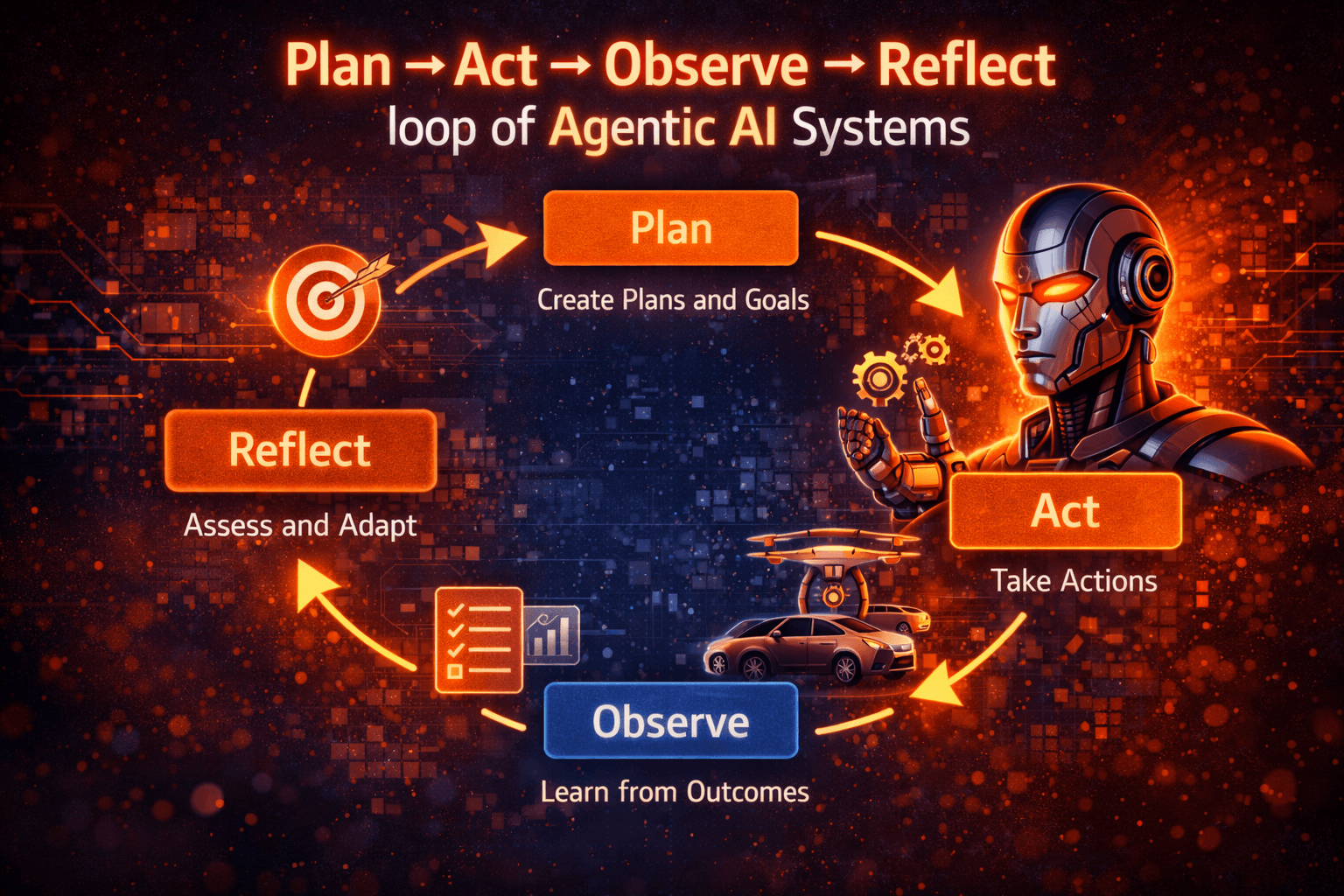
The Agentic AI Loop
Modern AI agents operate on a cycle often referred to as ReAct (Reason-Act). The agent continuously loops through a process of reasoning about its next move and then acting on that decision until the final goal is accomplished.
Break down the high-level goal into concrete, actionable steps
Execute the next step by calling tools or APIs
Receive feedback from the environment (API responses, database updates, user input)
Update internal understanding and determine next actions based on what was observed
Example Workflow: Book a flight to SFO for tomorrow morning
Core Differences: Agentic AI vs Generative AI
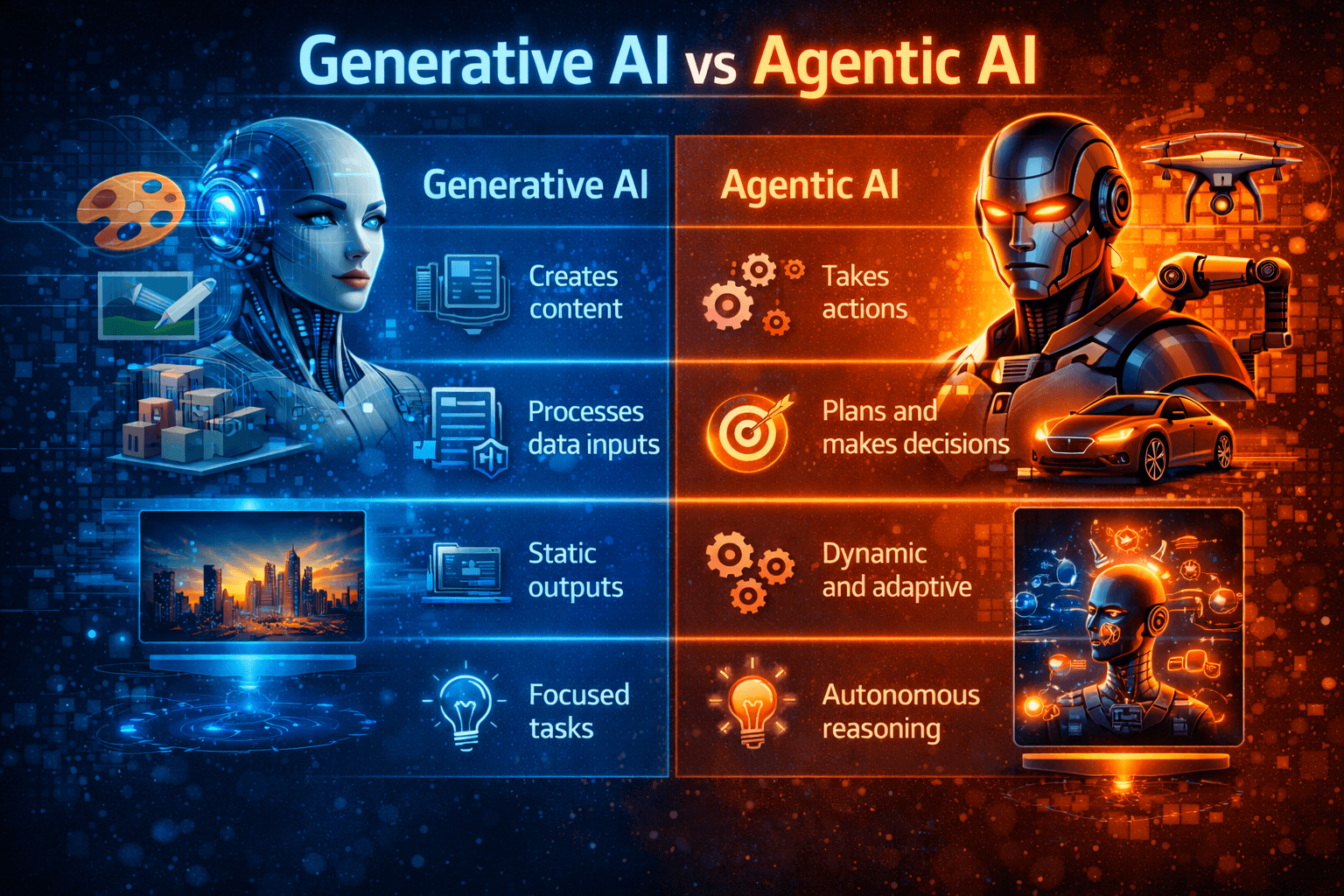
| Feature | Generative AI | Agentic AI |
|---|---|---|
| Purpose | Create content (text, images, code) based on prompts | Achieve goals through autonomous action and decision-making |
| Autonomy Level | Reactive—waits for user input, responds once | Proactive—initiates actions, pursues goals independently |
| Tool Usage | None—output is the final product | Extensive—calls APIs, interacts with databases, uses software tools |
| Memory | Limited to conversation context window (typically 4K-128K tokens) | Maintains persistent context across sessions; long-term memory via vector databases |
| Real-World Execution | Cannot act on its outputs—can't send emails, update systems, or complete transactions | Executes real-world actions—books flights, updates CRM, processes payments |
| Interaction Pattern | Single-turn or multi-turn conversation | Multi-step workflow with planning, execution, and adaptation |
| Infrastructure Needs | Runs on cloud GPUs in discrete bursts | Requires distributed, low-latency infrastructure with edge compute |
| Output | Content (text, image, code) | Completed tasks and achieved goals |
The two can also work together. An agentic AI system might use generative AI to compose a personalized message, but determine when, where, and how to send it as part of a larger workflow.
Architecture Comparison (Technical Deep Dive)
LLM-Based Generation Flow
- 1. User Input: A prompt is provided (text, image, etc.)
- 2. Tokenization: Input is converted into tokens (numerical representations)
- 3. Model Processing: Tokens pass through transformer layers with self-attention mechanisms
- 4. Probability Distribution: Model calculates probabilities for next tokens
- 5. Token Generation: Next token is selected based on sampling strategy (temperature, top-k, etc.)
- 6. Decoding: Process repeats until completion, generating output tokens
- 7. Response: Generated text/image/code is returned to user
This flow is stateless in terms of long-term memory—each conversation is essentially fresh, though context windows allow for within-conversation memory.
Agent Loop (Plan → Act → Observe → Reflect)
Planning Module
Breaks high-level goals into concrete steps; uses the LLM's reasoning capabilities for task decomposition; creates execution plan with dependencies and alternatives
Execution Engine
Manages the agent's runtime environment; maintains state across steps; handles parallel execution when possible
Tool Integration Layer
Provides access to external APIs and systems; manages authentication and rate limiting; translates agent decisions into API calls
Memory System
Current conversation, plan status, recent observations
Past successes/failures stored in vector databases for retrieval
Reflection Mechanism
Evaluates outcomes of actions; updates plans based on new information; learns from mistakes for future tasks
Tool Calling & API Integration
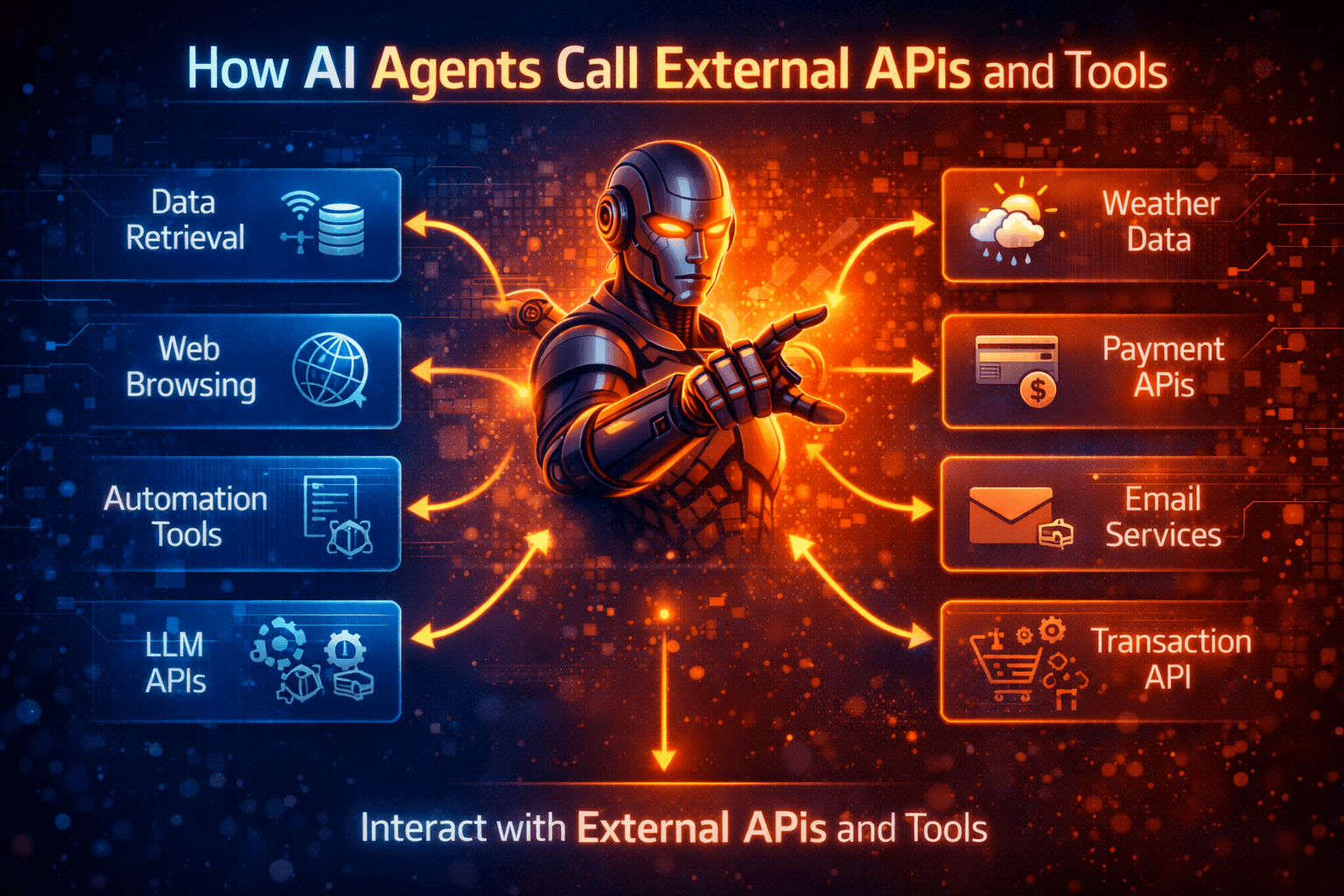
The ability to use tools is what gives agents their power to act in the world. In a digital context, tools are almost always APIs.
- 1. The agent's LLM is trained to recognize when a tool is needed
- 2. The model outputs a structured request (e.g., JSON specifying the tool and parameters)
- 3. The agent runtime executes the actual API call
- 4. Results are fed back into the agent's context
- 5. The agent determines next steps based on the response
Memory Systems
Memory in agentic systems is more sophisticated than the context window of a single LLM session.
Short-Term Memory
Holds conversation history with the user; tracks the current plan and progress; stores recent observations and tool outputs; typically implemented as an extended context window
Long-Term Memory
Stores summaries of completed tasks; remembers successful strategies and past failures; uses vector embeddings for semantic retrieval; enables agents to 'learn' from experience over time
Episodic Memory
Records specific past interactions; can be retrieved when similar situations arise; helps personalize responses based on history
Real-World Use Cases
Generative AI
Content Creation
Marketing teams use generative AI to produce blog posts, social media content, ad copy, and email newsletters at scale. A single marketer can now produce what once required a team of writers.
Chatbots
Customer service chatbots handle routine inquiries, provide product information, and troubleshoot common issues. They're available 24/7 and can handle thousands of conversations simultaneously.
Image Generation
Designers create concept art, marketing visuals, and product mockups in minutes. Tools have become essential for rapid prototyping and visualization.
Code Generation
Developers use AI coding tools to write code faster, generate tests, and explore alternative implementations. Studies show significant productivity gains, with some tasks seeing 50%+ time savings.
Education
AI tutors provide personalized explanations, generate practice problems, and adapt to each student's learning pace.
Agentic AI
Autonomous Business Automation
Acts as an AI co-pilot that identifies leads, follows up, and even helps close deals. McKinsey reports that AI-qualified leads improve conversion rates and reduce time spent on manual prospecting.
Used a Voiceflow agent to handle after-hours patient inquiries and appointment bookings, generating $50,000 in additional revenue.
SaaS Workflow Management
Global manufacturer uses AI agents to automate order processing via email. This has automated 80% of transactional decisions and reduced average customer response time from 42 hours to nearly real-time.
AI-Driven Decision Systems
Uses AI agents for proactive fraud protection, directing 38% more users to high-quality automatic query resolution while reducing false positive alerts by 40%.
Customer Support
Powers agentic AI for brands like Roam and The Institute of Human Mechanics, deploying autonomous support agents that resolve issues end-to-end without human involvement.
Healthcare
Built an 'empathy engine' that speaks with patients between visits, triages risk, and alerts clinicians when intervention is needed.
Uses agentic AI in smart inhalers to analyze air quality and medication usage, alerting users and physicians in real time.
Retail
Has deployed agentic AI in its Intelligent Retail Lab, where robots and AI systems track inventory and restock shelves automatically.
HR
Has developed agentic HR solutions that automate everything from PTO requests to benefits inquiries.
Software Development
Limitations & Risks
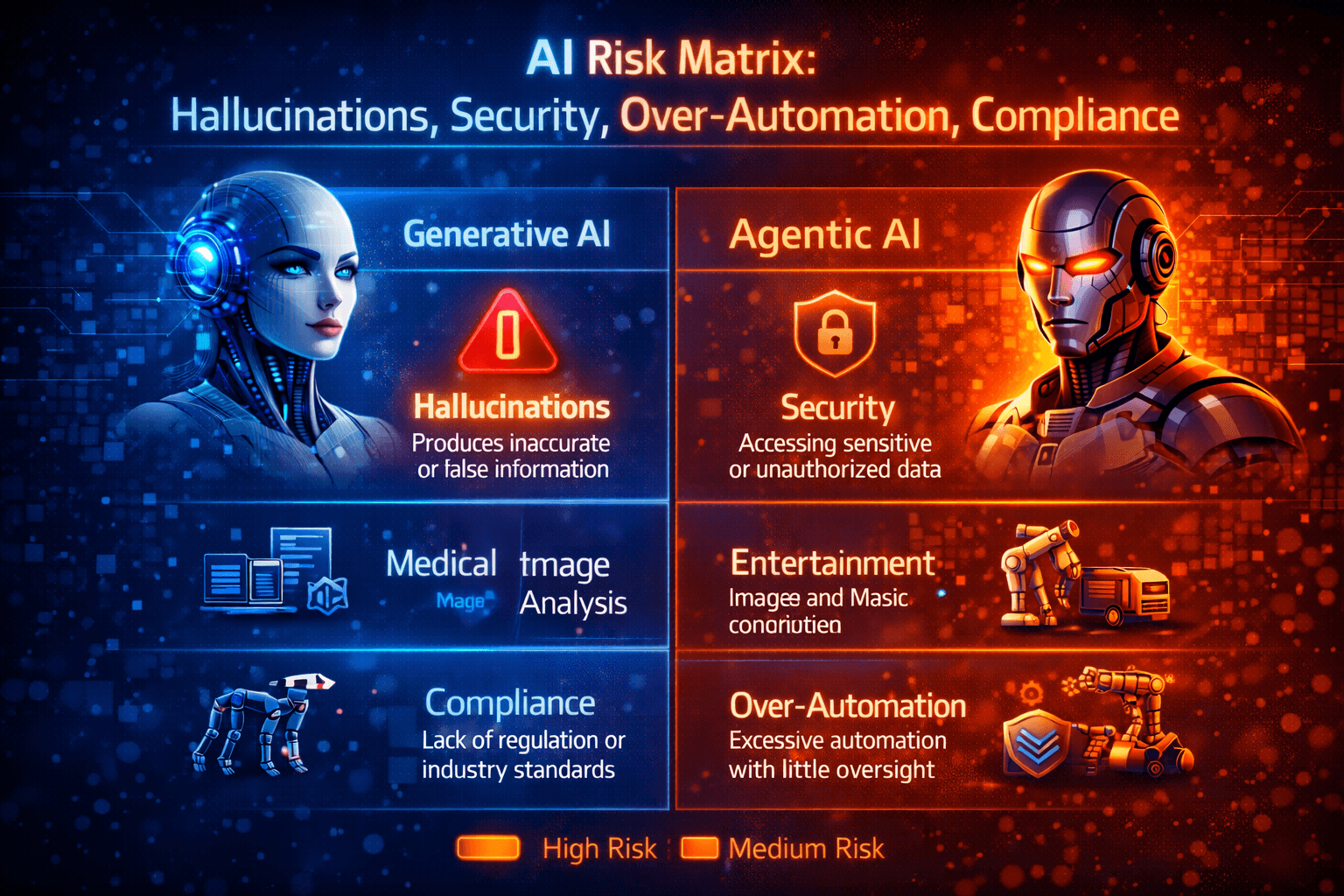
Hallucinations
Generative AI models can confidently produce false or nonsensical information. This happens because they're trained to predict plausible-sounding text, not to verify facts.
Impact: In enterprise settings, hallucinations can lead to bad decisions, regulatory violations, and reputational damage. In customer-facing applications, they erode trust.
Mitigation: Techniques like Retrieval-Augmented Generation (RAG) help by grounding responses in verified data sources. External guardrails can also validate outputs before they reach users.
Security Risks
Agentic AI introduces entirely new security challenges. When AI agents can independently access databases, make purchases, or alter code, the attack surface expands dramatically.
Key Concerns:
- •Identity and Authentication: How do you reliably identify an AI agent? How do you enforce least-privilege access? What happens if an agent's credentials are stolen?
- •Observability: When an autonomous task fails, how do you debug the agent's 'thought process'? You need clear audit trails of every decision, API call, and parameter.
- +1 more concerns
Mitigation: Advanced API gateways can serve as control planes for AI agents, enforcing authentication, providing observability, and implementing fine-grained governance.
Over-Automation Risks
IDC warns of a concerning possibility: if enterprises don't prioritize high-quality AI-ready data, they face 'negative productivity'—spending more time fixing AI mistakes than they save through automation.
Productivity Paradox: When agents make errors, humans must intervene. If error rates are too high, the net effect is reduced productivity rather than gains.
Organizational Risk: IDC predicts that by 2028, 69% of in-house AI agent projects will be abandoned for failing to meet ROI targets. The main culprits: underestimating implementation costs and overestimating business value.
Compliance & Data Concerns
As agents gain more autonomy, governance becomes critical.
Regulatory Risk: IDC warns that by 2030, up to 20% of enterprises could face lawsuits, massive fines, or even CIO firings due to poorly controlled AI agents causing high-profile incidents.
Safety Failure Modes:
- Toxicity: Personal insults, social group discrimination, harassment
- NSFW: Explicit content, illegal behavior, self-harm instructions
- Generic Harm: Content enabling harmful actions, misinformation, violent narratives
Governance: Enterprises need external, model-agnostic safety architectures that enforce uniform policies across all AI deployments—validating outputs in real-time, scoring semantic risk, and maintaining comprehensive audit logs.
Why Businesses Are Shifting Toward Agentic AI
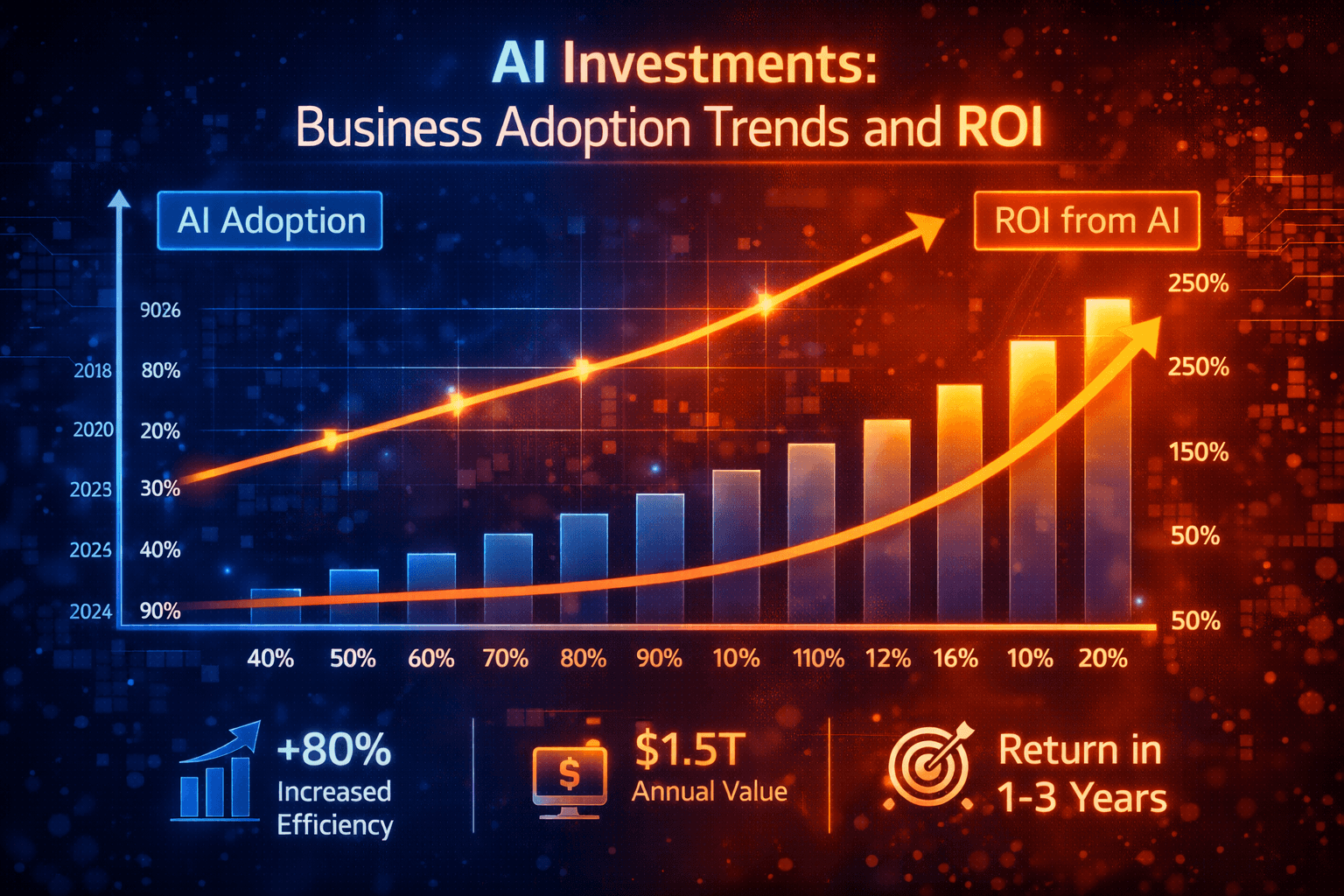
Cost Efficiency
Agentic AI delivers measurable cost savings by automating entire workflows, not just individual tasks.
Real World Results:
Saved 40 minutes per interaction across 57,000+ employees using AI
Reduced query execution time by 95% for 50,000 employees using Gemini-based agents that translate natural language to SQL
Automation Beyond Chat
Generative AI automates content creation. Agentic AI automates outcomes.
Generative
Draft an email
Agentic
Analyze CRM data, identify leads, craft personalized emails, send them, track responses, and update the pipeline
Competitive Advantage
IDC's research shows that companies establishing mature AI Centers of Excellence (CoE) will outperform competitors by 20% in innovation, speed, and service quality.
Key Differentiators:
- Multi-agent orchestration capabilities
- AI-ready data infrastructure
- Robust governance frameworks
- Workforce trained in AI collaboration
Scalability
Agentic AI scales differently than human labor. Once an agent workflow is built, it can handle 10 tasks or 10 million with minimal additional cost.
Infrastructure: Scaling agentic AI requires distributed infrastructure—edge compute for low-latency decisions, on-premises mini data centers for sensitive data, and cloud for surge capacity.
Workforce: By 2026, 40% of roles in large enterprises will involve deep collaboration with AI agents. The definition of 'entry-level' work is being rewritten.
Which One Should You Build With in 2026?
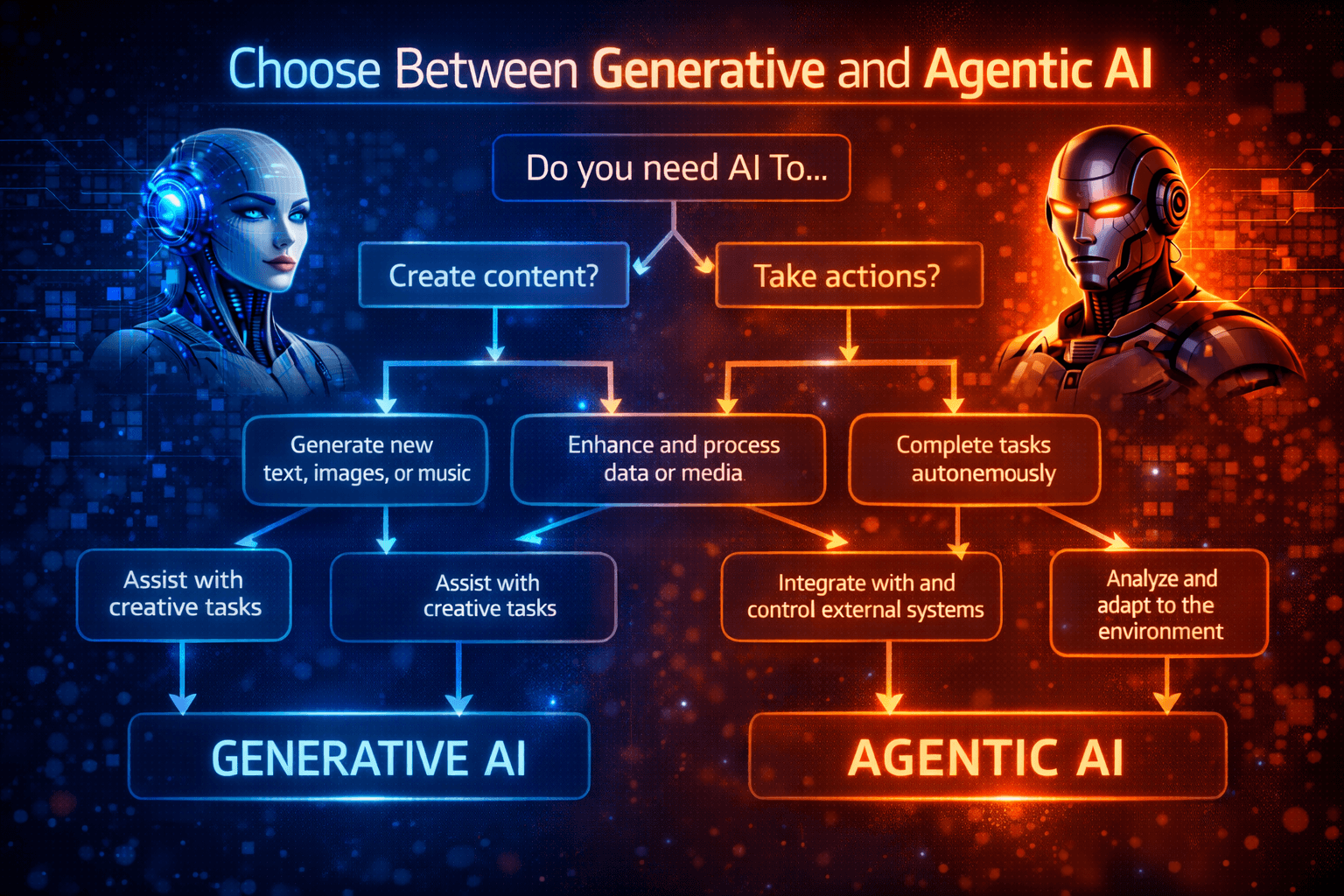
For Startups
Generative AI if you're building content-focused products: content creation tools, creative assistance apps, prototyping and MVP development
Agentic AI when you need to deliver outcomes, not just content: customer service automation, workflow automation tools, vertical SaaS with complex processes
Use generative AI as a component within agentic systems. Your agent can generate content when needed, but the core value comes from taking action.
For SaaS Products
IDC predicts that by 2028, 70% of software vendors will be forced to重构 their business models as AI agents replace human users. Traditional per-seat pricing is dying.
- Build agentic capabilities into your product
- Design for multi-agent collaboration (the Agent2Agent protocol from Salesforce and Google Cloud is a major step toward interoperable agent ecosystems)
- Prepare for outcome-based pricing models
For Enterprises
By 2027, if you don't have high-quality AI-ready data, scaling AI will lead to 15% productivity declines due to hallucinations and errors.
Build governance into agent design from day one—don't bolt it on later. Establish clear human oversight points, escalation paths, and audit mechanisms.
By 2027, 45% of enterprises will manage multi-agent systems across multiple channels. Start building orchestration capabilities now.
40% of roles will involve deep AI collaboration by end of 2026. Start training now.
For Hybrid Approach
The sweet spot: Most organizations (47%) take a hybrid approach, combining off-the-shelf agents with custom components.
Standard capabilities like customer support, internal knowledge management, and routine automation
Differentiated capabilities unique to your business, integration with proprietary systems, specialized workflows
Key Principle:
Agentic AI isn't a replacement for generative AI—it's an evolution. The most powerful systems will use generative AI for creation and agentic AI for execution.
The Future of AI Systems
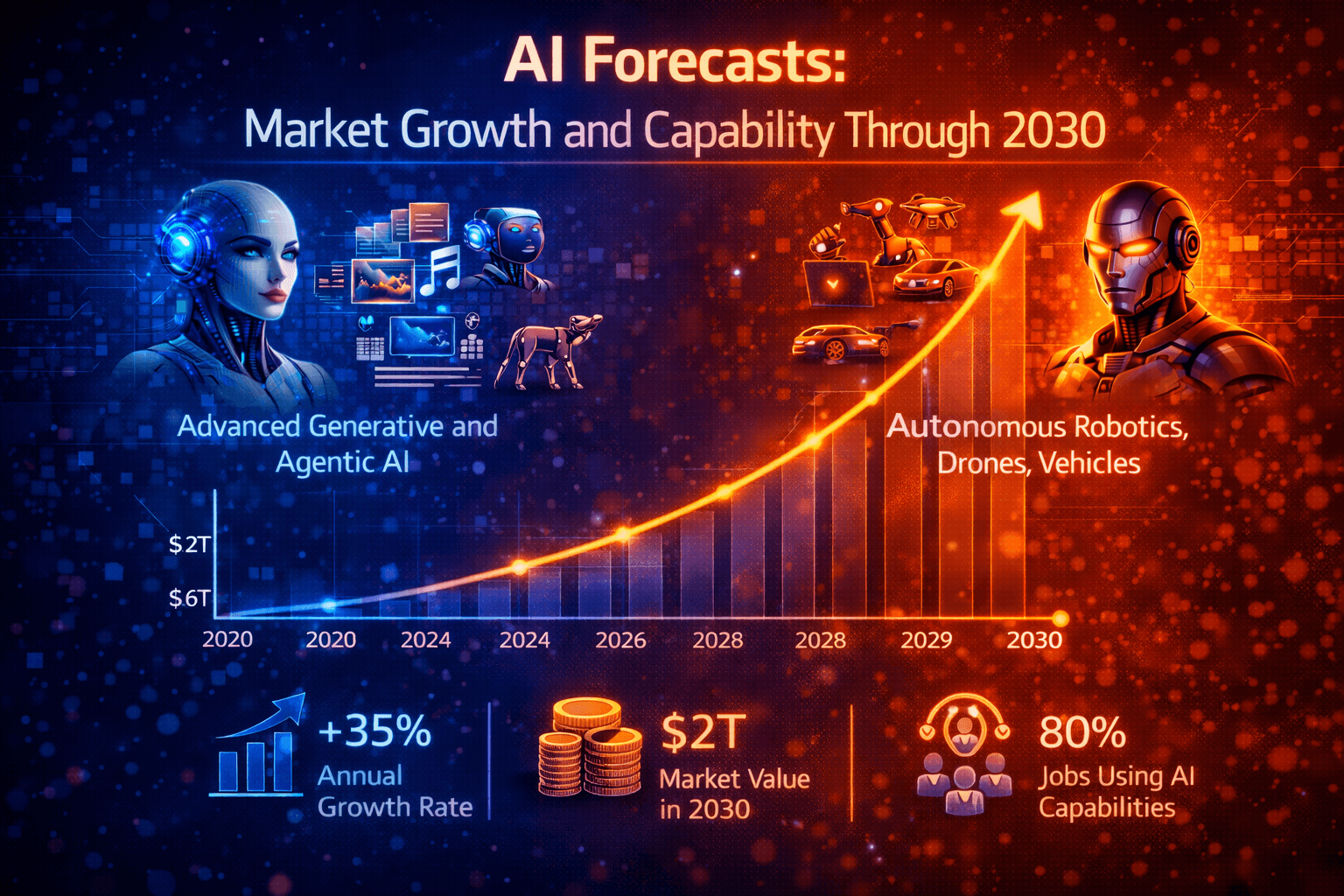
Multi-Agent Ecosystems
The future isn't single super-intelligent agents—it's ecosystems of specialized agents working together.
Agent-to-Agent: Salesforce and Google Cloud are creating cross-platform AI agents using the Agent2Agent (A2A) protocol, establishing an open foundation for 'agentic enterprises'.
Orchestration: IDC predicts that by 2027, 45% of enterprises will manage multi-agent systems across multiple channels and applications. The competitive advantage will shift from having the best single agent to having the best agent orchestration.
Specialization: Different agents will handle different functions—research, planning, execution, verification—coordinating their efforts like human teams.
AI Employees
The concept of 'digital labor' is becoming reality. IDC predicts that by 2028, the traditional per-seat software licensing model will be obsolete because AI agents, not humans, will be doing the work.
New Workforce: Organizations will manage a mix of human and AI employees. Humans handle strategy, creativity, and oversight; AI agents handle execution, analysis, and routine decisions.
Role Transformation: By 2026, 40% of roles in large enterprises will involve deep collaboration with AI agents. Job definitions are being rewritten—entry-level roles may involve supervising multiple agents rather than doing the work themselves.
Human + AI Collaboration
The most successful organizations won't be those with the most advanced AI, but those with the most effective human-AI collaboration models.
Human Oversight: As agents prove reliable, humans shift from constant supervision to strategic oversight—monitoring exceptions rather than approving every action.
Augmentation: Google Cloud's 2026 report emphasizes that AI agents help employees become more productive by handling routine tasks, freeing them for higher-level strategic work.
Continuous Learning: Organizations are moving from one-off AI training to continuous learning programs that help employees master AI skills at their own pace.
Ultimate Outcome: IDC predicts that by 2031, 60% of CEOs will use AI agents for strategic decision-making, driven by market volatility and the need for faster, data-driven insights.
Generative AI changed how we create. Agentic AI is changing how we work. The question for 2026 isn't which one to choose, but how to combine them to build systems that don't just think—they do.
The Real Timeline: Year by Year Summary (2020–2026)
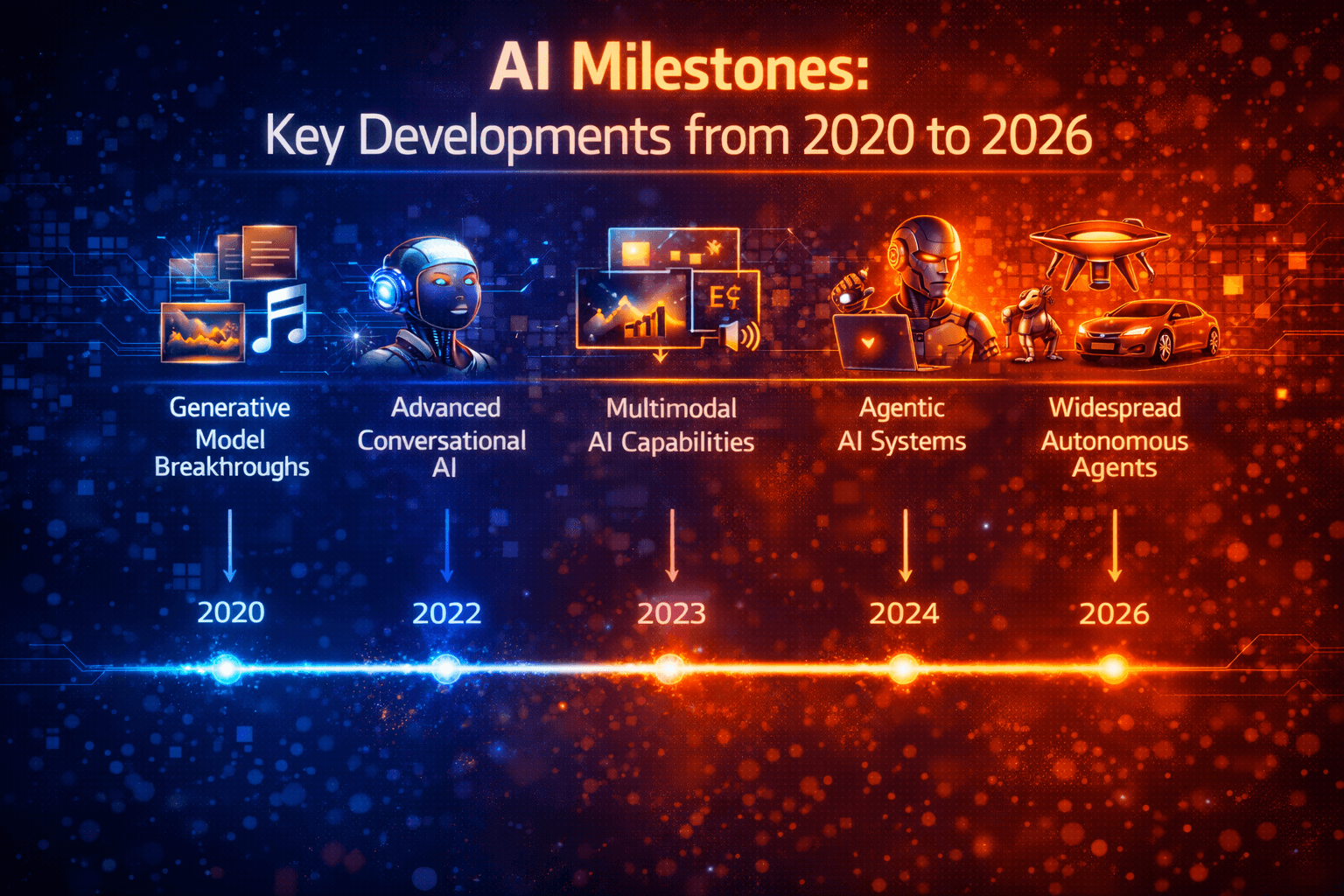
Let me walk you through what actually happened, year by year. This isn't theory—it's the path we all lived through.
The Foundation Years
- •Pandemic accelerated adoption rather than slowing it—56% of companies reported using AI in at least one business function by 2021
- •GPT-3 dropped in 2020 and changed the game: it could write emails, articles, even code
- •Healthcare investment surged to $13.8 billion for drug discovery and diagnostics
- +2 more events
These years laid the technical and cultural groundwork for everything that followed. We were building the runway.
The Generative AI Breakout
- •ChatGPT hit 100 million monthly active users in January—roughly two months post-launch. Fastest-growing consumer application on record.
- •Of the 149 foundation models launched, 65.7% were open-source, up from 44.4% in 2022
- •33% of organizations were already using generative AI tools; 67% planned to increase AI investment
- +2 more events
GenAI proved it wasn't a toy—it was infrastructure. The question shifted from 'can AI do this?' to 'how fast can we scale it?'
Mainstream Adoption and Regulatory Momentum
- •72–78% of companies reported using AI, with marketing and product teams leading the charge
- •75% of knowledge workers used generative AI daily—not for brainstorming, but for drafting, summarizing, and analysis
- •8 in 10 software buyers prioritized products with AI capabilities; AI became table stakes in RFPs
- +3 more events
2024 made AI the default, but it also made clear that adoption ≠ impact. The hard work was just beginning.
Entering the Intelligent Age
- •Only 1% of organizations described themselves as truly AI mature—the gap between enthusiasm and capability widened
- •69% of executives said they invested in generative AI early, yet 47% acknowledged their firms were moving too slowly to turn investment into impact
- •70% of employees expected 30%+ of their work to be affected by generative AI within two years
- +2 more events
The market matured, but most organizations weren't ready for what came next. Governance and scaling playbooks became the new competitive frontier.
The Agentic AI Inflection
- •We officially exited the era of 'AI as a Chatbot' and entered the era of 'AI as a Co-worker'
- •Agentic AI overtook Generative AI as the top priority for CIOs
- •46% of AI proof-of-concepts have already progressed into production
- +6 more events
2026 is the year we stop building agents and start running them. The focus has shifted from experimentation to operation—from 'can we build it?' to 'can we trust it at scale?'
What's Coming Next: 2026–2030
Based on current trajectories (and with full awareness that my 2020 predictions were garbage), here's my attempt to see around the corner.
Very Likely (80%+ confidence)
Continued agent improvements
The agent loop—Plan → Act → Observe → Reflect—will get tighter, faster, and more reliable. Multi-agent ecosystems will emerge where specialized agents collaborate like teams.
By 2027, 45% of enterprises will manage multi-agent systems across multiple channels and applicationsVideo generation goes mainstream
What image generation did for photos, video generation will do for moving images. By 2028, AI-generated video will be indistinguishable from camera-captured footage in most commercial contexts.
AI becomes invisible infrastructure
Just as we don't think about electricity when we flip a switch, we'll stop thinking about AI when we work. It'll simply be how software works.
By the end of 2026, 40% of enterprise applications will contain integrated, task-specific AI agents (Gartner)Most knowledge work significantly transformed
Not eliminated—transformed. The ratio of human to machine work will shift dramatically.
By 2026, 40% of roles in large enterprises will involve deep collaboration with AI agentsNew jobs we can't imagine today
In 2020, 'AI agent manager' wasn't a job title. Today, it's a career track. The next six years will create roles we literally don't have names for yet.
Possible (40-60% confidence)
AI-accelerated AI research creating feedback loop
If AI can help design better AI, the curve bends vertical. We're already seeing hints—models that suggest architecture improvements, generate training data, evaluate outputs.
Major scientific breakthroughs
AI-accelerated science is already happening—AlphaFold solved protein folding in 2020. The next decade could bring breakthroughs in materials science, medicine, and energy.
Personal AI that knows you deeply
Imagine an AI that's read everything you've written, knows your work style, understands your goals, and helps you execute—not just answer questions.
Significant regulatory frameworks globally
The EU AI Act is just the beginning. By 2030, every major economy will have comprehensive AI regulation.
Unknown (but possible)
The pace of change will continue to surprise us. Anyone planning for linear progress will be wrong. Including me.
My Honest Assessment: What I Got Right and Wrong About AI
Looking back at my 2020 predictions from the vantage point of 2026, I need to be brutally honest. Not the polished, 'I-was-mostly-right' version we like to tell ourselves. The real one.
What I Got Right
AI would impact knowledge work significantly
This one feels almost laughably obvious now, but in 2020 it wasn't. Today? 75% of knowledge workers use generative AI tools daily. It's not futuristic. It's just Tuesday.
75% of knowledge workers use generative AI tools daily in 2026Text generation would improve substantially
I knew language models would get better. What I didn't predict was the leap from GPT-3 to today's models. Today's models don't just generate text—they reason, plan, and explain their thinking.
Models now demonstrate sophisticated reasoning capabilitiesBusiness adoption would accelerate
I predicted companies would eventually take AI seriously. What I didn't predict was the velocity. By 2024, 72-78% of companies reported using AI in at least one business function.
72-78% adoption by 2024What I Got Wrong
Timeline
Thought: I thought 2026 capabilities would arrive by 2035
I was off by nearly a decade. By early 2024, large language models gained the ability to take actions by calling APIs. By 2025, enterprises had dozens or hundreds of agents running across different platforms.
46% of AI proof-of-concepts had already progressed into production by late 2025Speed
Thought: I underestimated exponential growth
I thought I understood exponential growth. I'd read the books, drawn the curves. But understanding it intellectually and feeling it viscerally are different things. The gap between 'impressive demo' and 'production-ready infrastructure' collapsed from years to months.
Scope
Thought: I thought narrow improvements, not broad transformation
I made the classic mistake of assuming AI would improve things piece by piece. Instead, AI became the stack, not just part of it. By 2026, 40% of roles in large enterprises involve deep collaboration with AI agents. Not augmentation. Collaboration.
40% of roles involve deep AI collaboration"Linear thinking fails in exponential times. We don't overestimate technology in the long run—we overestimate it in the short run and dramatically underestimate it in the medium run. The gap between 'what's possible' and 'what's deployed' collapsed faster than anyone with a linear mindset could track."
The Final Truth: The Timeline That Matters Is Yours
I've spent thousands of words walking you through global timelines, market sizes, and technological milestones. But here's the truth I've learned from living through 2020–2026: The global AI timeline is interesting. Your personal AI timeline is what matters.
When did AI become real for you?
Be honest. There was a moment—probably not when you first heard about AI, but when you first used it and felt something shift.
You were genuinely early. You saw the wave before it crested.
You were on time. You arrived with the crowd, but early enough to matter.
You're catching up. The foundation was laid, but there's still room.
You're late—but not too late. The window is narrowing, but it's still open.
Are you using AI daily?
Are you using it strategically or just dabbling? There's a difference between asking ChatGPT to write a poem and restructuring your workflow around AI capabilities. One is entertainment. The other is adaptation.
Why not? I'm not asking judgmentally. I'm asking diagnostically. Because the gap between those who've integrated AI into daily work and those who haven't is widening every quarter. And it's not a skill gap—it's an attention gap.
Is your skillset adapted for 2026?
- •Are you valuable for execution or judgment?
- •Can AI do 80% of what you do? (If yes, what's the 20% you add?)
- •Are you actively building skills that complement AI rather than compete with it?
AI doesn't replace jobs. It replaces tasks. And if most of your tasks are automatable, your role is vulnerable—not to AI directly, but to someone who knows how to use AI to do what you do, faster and cheaper.
The AI revolution of 2020–2026 created massive winners and losers. Not companies. Not countries. Individual people.
Winners
Those who adapted early. Who learned the tools. Who shifted from execution to judgment. Who asked 'what can AI do?' and then built careers around the answer.
Losers
Those who ignored it. Who hoped it would go away. Who kept doing what worked in 2020 and wondered why the world passed them by.
"I'll never forget mine. It was late 2022, and I was staring at a screen watching ChatGPT generate a business strategy document. Not a draft. Not bullet points. A complete, coherent, useful analysis of a market I'd spent weeks researching. It took thirty seconds. And in that moment, I realized that everything I thought I knew about the future was wrong. Not slightly wrong. Fundamentally, directionally, catastrophically wrong."
The question that matters:
How will you change between 2026 and 2030?
Because six years from now, someone will write an article called 'AI in 2026 vs AI in 2032: What Actually Changed.' And your career trajectory—your relevance, your adaptability, your ability to navigate uncertainty—will depend entirely on which side of that change you're on. Not which company you work for. Not which degree you earned. Not which tools you mastered. Just whether you kept learning. Whether you stayed curious. Whether you adapted when adaptation was hard.
The global AI timeline is interesting. Your personal AI timeline is what matters. Make sure you're on the right side of it.